Insights Into Underground Mining Loaders and Critical Features to Know Now
Underground mining loaders are specialized machines used to move broken rock, ore, and other mined material through underground workings.
They are commonly associated with load-haul-dump (LHD) equipment, which can load material, transport it over short distances, and discharge it at another location.
Underground environments create different operating conditions from surface mines. Narrow tunnels, limited visibility, restricted ventilation, uneven surfaces, and confined work areas influence how loaders are designed and operated. Their compact dimensions and articulated steering allow them to maneuver through spaces where conventional earthmoving equipment may not be practical.
How Underground Loaders Work
An underground loader generally uses a front bucket to collect fragmented material. The machine then carries the load to a designated transfer point before returning for another loading cycle.
Important characteristics include:
- Compact dimensions for confined underground areas
- Articulated steering for maneuverability
- Bucket capacity suited to the mining application
- Heavy-duty structures for demanding conditions
- Operator controls designed for precise movement
- Power systems configured for underground operating requirements
The choice of loader depends on tunnel dimensions, material characteristics, haul distances, production requirements, and site conditions.
Importance
Underground mining loaders play an important role in material movement because mining operations depend on repeated loading and transportation cycles. Equipment performance can influence how efficiently material moves between excavation areas and designated transfer locations.
Safety is another important consideration. Underground operators work in environments where visibility, ventilation, ground conditions, and available space can create additional challenges. Features such as enclosed operator areas, cameras, lighting, proximity detection, braking systems, and ergonomic controls can contribute to safer operating conditions.
Critical Features to Understand
| Feature | Main Purpose | Why It Matters |
|---|---|---|
| Bucket capacity | Holds excavated material | Influences load volume |
| Articulated steering | Enables tighter turns | Supports confined-area movement |
| Ground clearance | Provides space beneath the machine | Helps on uneven surfaces |
| Braking system | Controls machine movement | Important on underground grades |
| Operator visibility | Supports awareness | Helps identify nearby hazards |
| Ventilation compatibility | Manages exhaust considerations | Relevant in enclosed workings |
| Remote operation | Allows operation from another location | Can reduce operator exposure |
Maintenance planning also matters because underground loaders operate in abrasive and demanding conditions. Components such as tires, hydraulic systems, brakes, buckets, transmissions, and electrical systems require regular inspection according to the equipment manufacturer's specifications.
Recent Updates
Recent developments in underground mining loaders have focused on electrification, automation, remote operation, digital monitoring, and improved operator protection. Battery-electric loaders are receiving increased attention because underground environments place particular importance on heat and exhaust management.
Automation is also changing how some loaders are operated. Depending on the mining application, automated or remotely controlled functions can support loading and material movement while reducing the need for an operator to remain directly inside certain work areas.
Digital Monitoring and Electrification
Modern equipment increasingly incorporates sensors and onboard monitoring systems. These technologies can track operating parameters such as machine condition, utilization, temperatures, hydraulic performance, and battery status on applicable electric models.
Battery-electric underground loaders can also reduce reliance on diesel propulsion within underground workings. However, their deployment requires appropriate charging infrastructure, electrical planning, battery management procedures, and consideration of operating cycles.
Tools and Resources
Several resources can help readers understand underground mining loaders and their technical characteristics. Manufacturer equipment specifications can provide information about dimensions, bucket capacity, operating weight, power systems, and turning characteristics.
Mining engineering references, equipment manuals, maintenance documentation, and mine-planning software can also help users understand how loaders fit into underground material-handling systems. Equipment comparison tables and productivity calculators may be used to examine factors such as loading capacity, cycle time, travel distance, and operating conditions.
Information Commonly Compared
When examining different underground mining loaders, readers may encounter specifications such as:
- Bucket volume and rated payload
- Machine dimensions and turning radius
- Engine or electric power configuration
- Hydraulic system characteristics
- Operating weight
- Ground clearance
- Travel speed
- Remote-control capabilities
Specifications should be interpreted according to the operating environment because published figures may depend on configuration and application.
FAQs
What are underground mining loaders used for?
Underground mining loaders move fragmented ore, rock, and other material from excavation areas to transfer points or haulage systems. LHD loaders are commonly used for loading, short-distance transportation, and dumping.
What features are important in underground mining loaders?
Important features include bucket capacity, compact dimensions, articulated steering, braking systems, operator visibility, ground clearance, and ventilation compatibility. Remote operation and monitoring may also be relevant to some applications.
Are underground mining loaders available with electric power?
Yes. Battery-electric underground loaders are part of the broader shift toward electrification in mining. Their use requires suitable charging arrangements and consideration of battery capacity, duty cycles, and underground infrastructure.
How does automation affect underground loaders?
Automation can enable certain loading, travel, or dumping functions to be controlled remotely or performed with limited operator intervention. The specific capabilities depend on the equipment and mine operating system.
Why is loader size important underground?
Loader dimensions must correspond with tunnel width, height, turning areas, and other physical constraints. A machine that fits the available underground space can maneuver more effectively within its intended operating area.
Conclusion
Underground mining loaders are designed for the demanding conditions of confined mining environments. Their key characteristics include compact dimensions, articulated steering, suitable bucket capacity, braking systems, visibility features, and appropriate power systems. Recent developments have expanded the use of battery-electric power, automation, remote operation, and digital monitoring. Understanding these features provides useful context for evaluating how underground material movement is organized.

Related Post...
Articulated Dump Trucks: Tips to Understand Performance Before Project Delays
Updated: September 26, 2026
Read More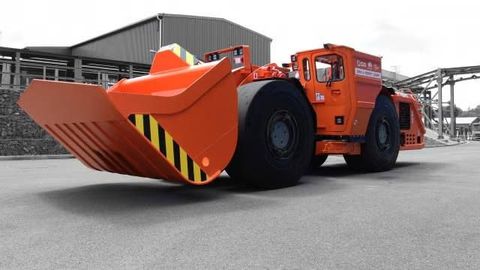
Insights Into Underground Mining Loaders and Critical Features to Know Now
Updated: September 26, 2026
Read More
Motor Graders: Insights Into Power, Precision, and Modern Roadwork Needs
Updated: September 26, 2026
Read More