Motor Graders: Insights Into Power, Precision, and Modern Roadwork Needs
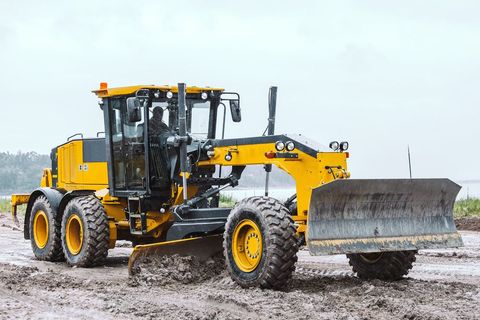
Motor graders are wheeled construction machines designed to shape, level, and finish surfaces with a long adjustable blade called a moldboard.
They are commonly used for road construction, shoulder shaping, drainage slopes, site preparation, and material spreading.
The moldboard sits between the front and rear axles, allowing operators to adjust blade angle, height, and tilt while steering.
Main Components
A motor grader combines several systems that work together:
- Engine and transmission provide power.
- Moldboard and circle assembly control cutting, spreading, and shaping.
- Articulated frame helps the machine maneuver around curves and confined areas.
- Tandem rear wheels provide traction and stability.
Importance
Why Precision Matters
A road surface needs controlled slopes and a consistent profile so water can drain properly and traffic can move over an even surface. Variations in grading can affect drainage and pavement preparation.
Motor graders are also used for maintaining unpaved roads, shaping shoulders, preparing foundations, and creating drainage channels.
Power and Control
Power matters because the grader may need to cut compacted material, move aggregate, or maintain blade position over uneven ground. However, usable performance depends on more than engine output. Transmission behavior, traction, blade geometry, hydraulic response, machine weight, and operator control also influence results.
| Factor | Role in grading |
|---|---|
| Engine power | Supports movement and material cutting |
| Blade width | Influences area covered per pass |
| Operating weight | Affects stability and traction |
| Articulation | Helps maneuverability |
| Grade control | Supports consistent elevation and slope |
Recent Updates
Automation and Grade Control
Developments from 2024–2026 show continued movement toward integrated machine guidance and automation. Modern motor graders can incorporate cross-slope control, 3D grade systems, position sensing, and digital displays that help operators maintain planned elevations and slopes.
Newer machine designs are also placing greater attention on operator controls and visibility. Recent grader updates have included joystick control options, redesigned operator environments, additional camera systems, and transmission features intended to improve control during finishing work.
Another trend is maintenance-focused design alongside grading technology. Recent developments include sealed components, updated circle assemblies, and centralized maintenance arrangements intended to simplify routine machine care.
Digital Workflows
Grade control systems increasingly connect machine positioning with site designs. GNSS and RTK positioning can provide location information, while onboard displays can show the operator how the blade relates to the planned surface. These systems are becoming part of broader data-supported construction workflows.
Tools and Resources
Useful Resources for Understanding Motor Graders
Readers researching motor graders can use resources such as:
- Manufacturer specification sheets for engine output, operating weight, blade dimensions, and control configurations.
- Operator manuals for controls, safety procedures, inspection routines, and machine functions.
- Grade-control guides for understanding 2D, cross-slope, GNSS, RTK, and 3D systems.
- Construction estimating spreadsheets for comparing material quantities, machine hours, and project assumptions.
- Digital terrain and grading software for reviewing surface models and planned elevations.
FAQs
What is a motor grader used for?
A motor grader is mainly used for shaping and finishing soil, aggregate, road surfaces, shoulders, slopes, and drainage profiles. It is associated with precision grading rather than heavy excavation.
How does motor grader grade control work?
Grade control uses sensors, positioning information, and digital design data to help determine blade position relative to the required surface. Depending on the system, it can provide guidance or automatically adjust parts of the blade.
What affects motor grader performance?
Engine power, operating weight, traction, transmission, blade dimensions, hydraulic response, ground conditions, and operator technique all influence performance.
Are modern motor graders automated?
Some modern motor graders include automated assistance and machine-control functions, but the level of automation varies. Systems can range from slope guidance to automated blade movement based on digital grade information.
Why are motor graders important for roadwork?
They help create controlled slopes, smooth surfaces, road crowns, shoulders, and drainage features. Consistent grading supports later paving and surface construction activities.
Conclusion
Motor graders remain important for precision earthwork because their moldboard and articulated design allow controlled shaping of surfaces. Developments combine mechanical capabilities with digital grade control, improved operator interfaces, and automation features. Understanding power, blade configuration, machine stability, and technology helps explain how these machines fit into modern roadwork. Their applications span road construction, maintenance, site preparation, and drainage shaping.

Related Post...
Wheel Loaders: Guide to Choosing the Right Machine Before Project Delays
Updated: September 26, 2026
Read More
Articulated Dump Trucks: Tips to Understand Performance Before Project Delays
Updated: September 26, 2026
Read More
Mining Dump Trucks: Insights Into Capacity and Hauling Performance
Updated: September 26, 2026
Read More