Aluminum Electrolytic Capacitors Explained: Discover Key Facts, Basics, and Technical Insights
Aluminum electrolytic capacitors are widely used electronic components designed to store and release electrical energy through an internal electrochemical structure. They exist because modern electrical and electronic systems require components with high capacitance values in compact sizes, especially for applications involving power smoothing, energy buffering, and filtering. Their construction, which includes an aluminum foil anode, electrolyte, and oxide dielectric layer, allows them to achieve higher capacitance than many other capacitor types of comparable size.
These capacitors became essential as electrical systems advanced and demanded reliable methods of stabilizing voltage, reducing noise, and supporting rapid power changes. Their ability to deliver large capacitance values at relatively small physical dimensions made them fundamental in consumer electronics, industrial control systems, automotive electronics, renewable energy equipment, LED drivers, and power regulation circuits.
Importance
Aluminum electrolytic capacitors matter today because nearly every electrical device relies on stable voltage conditions and controlled energy flow. Their role extends across multiple sectors:
-
Power Electronics – They help maintain stable output in AC-to-DC converters, rectifiers, and power conditioning circuits.
-
Industrial Automation – Used in controllers, motor drives, and sensors that depend on noise reduction and voltage smoothing.
-
Renewable Energy Systems – Support energy buffering in solar inverters, wind power converters, and battery-based energy systems.
-
Automotive Electronics – Assist in applications such as onboard chargers, engine control modules, and dashboard electronics.
-
Consumer Electronics – Enable proper functioning in televisions, computer power supplies, audio devices, and home appliances.
The problem they solve is simple but crucial: preventing voltage fluctuations and electrical instability. Without them, circuits could experience noise, spikes, irregular power delivery, or short component lifespan. Their high capacitance density, tolerance for ripple current, and adaptability across frequency ranges make them valuable in both small-scale and large-scale electronic systems.
Recent Updates
Recent developments in aluminum electrolytic capacitor technology have focused on improving durability, miniaturization, and performance under demanding conditions:
-
Higher Temperature Ratings (2024)
Manufacturers have been releasing models capable of withstanding temperatures up to 130°C to meet the needs of electric vehicles and compact power modules introduced throughout 2024. -
Longer Endurance Series (2023–2024)
Advancements in electrolyte formulation and aluminum foil treatment have resulted in capacitor series with endurance ratings exceeding 10,000 hours at high temperature. These updates were highlighted in several industry releases in late 2023 and throughout 2024. -
Low-ESR Variants for High-Frequency Circuits (2024)
New generation low-Equivalent Series Resistance (ESR) capacitors have been optimized for switching power supplies, LED drivers, and high-frequency converters. These improvements became more widely available in early 2024. -
Environmental Trends
With increased global attention on energy efficiency, many capacitor manufacturers have shifted to RoHS-compliant materials and eco-friendly electrolyte formulations.
These updates reflect ongoing improvements in reliability, compact design, and sustainability—key requirements as industries shift toward electrification and advanced power electronics.
Laws or Policies
Regulations affecting aluminum electrolytic capacitors differ across regions, typically focusing on safety, environmental impact, and material use:
-
RoHS (Restriction of Hazardous Substances)
Applies in the European Union, the UK, and many countries adopting similar frameworks. It restricts the use of substances such as lead, mercury, cadmium, and hexavalent chromium in electronic components. Most aluminum electrolytic capacitors today are designed to comply with RoHS requirements. -
REACH Regulation (EU)
Requires manufacturers to manage and report chemicals used in electrolytes or component assemblies. This influences electrolyte formulation and documentation requirements. -
UL and IEC Standards
Include safety testing, insulation quality, and performance standards. Capacitors used in industrial and household electronics typically follow IEC 60384 series standards regarding endurance, temperature behavior, and electrical performance. -
Global Energy Policies Affecting Electronics
Policies encouraging energy-efficient devices indirectly impact capacitor design because power supplies and converters must operate at higher efficiency levels. This leads to demand for low-loss, high-reliability capacitors.
While these regulations do not dictate specific capacitor designs, they guide material choices, safety ratings, and environmental compliance.
Tools and Resources
Several tools and resources can help understand, evaluate, or work with aluminum electrolytic capacitors:
-
Capacitance Calculators – Online tools that estimate required capacitance for smoothing or filtering based on input voltage, load, and ripple requirements.
-
Datasheet Libraries – Manufacturer websites provide technical sheets with ESR charts, lifetime estimates, and ripple current ratings.
-
Circuit Simulation Software – Tools like LTspice or Multisim allow modeling capacitor behavior in power circuits.
-
Component Selector Platforms – Electronic component portals offering filtering by voltage rating, capacitance, ESR, ripple current, and tolerance.
-
Reliability Estimation Tools – Some manufacturers offer calculators that estimate capacitor lifespan based on temperature and ripple current conditions.
These tools help engineers, students, and researchers understand performance, compare models, and plan circuits effectively.
FAQs
What is the main purpose of an aluminum electrolytic capacitor?
Its primary purpose is to stabilize voltage, smooth ripple, and store electrical energy in circuits. It is commonly found in power supplies, converters, and amplifiers.
Why do these capacitors have polarity?
They are polarized because their dielectric layer is formed electrochemically on the anode foil, creating a positive and negative terminal. Reversing polarity can damage the dielectric layer.
What factors affect capacitor lifetime?
Temperature, ripple current, internal resistance, and operating voltage all influence capacitor longevity. Higher temperatures and excess ripple current reduce lifespan.
Can aluminum electrolytic capacitors work at high frequencies?
They perform well at moderate frequencies but may be less efficient at very high frequencies due to ESR and inductance. For high-frequency applications, low-ESR varieties or alternative capacitor types may be used.
Are solid polymer electrolytic capacitors different from liquid-electrolyte versions?
Yes. Polymer types use a conductive polymer instead of a liquid electrolyte, offering lower ESR, longer life, and improved stability but at different performance ranges depending on design.
Conclusion
Aluminum electrolytic capacitors remain essential components across modern electronics due to their ability to deliver high capacitance in compact sizes while maintaining stable electrical performance. Their role in regulating voltage, filtering noise, and supporting power stability keeps them central to applications in industrial systems, consumer electronics, automotive modules, renewable energy devices, and advanced power converters.
Recent improvements have strengthened reliability, temperature endurance, and environmental compliance, reflecting evolving industry needs. As technology progresses toward more efficient and compact electronic systems, aluminum electrolytic capacitors continue to adapt through innovations in materials, electrolyte chemistry, and design methodology.

You may also like...


Heat Shrink Fabric Explained: Discover Core Knowledge, Applications, and Useful Resources
Last Update: December 12, 2025
Read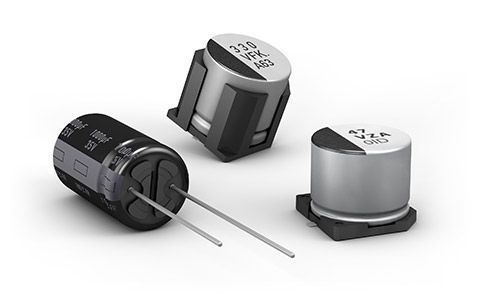
Aluminum Electrolytic Capacitors Explained: Discover Key Facts, Basics, and Technical Insights
Last Update: December 12, 2025
Read